
A pure tone audiometry (PTA) test is usually the first and most reliable step toward finding out what’s going on in your hearing. PTA is the gold-standard hearing test used by audiologists to measure exactly how well each ear detects sound across different pitches.
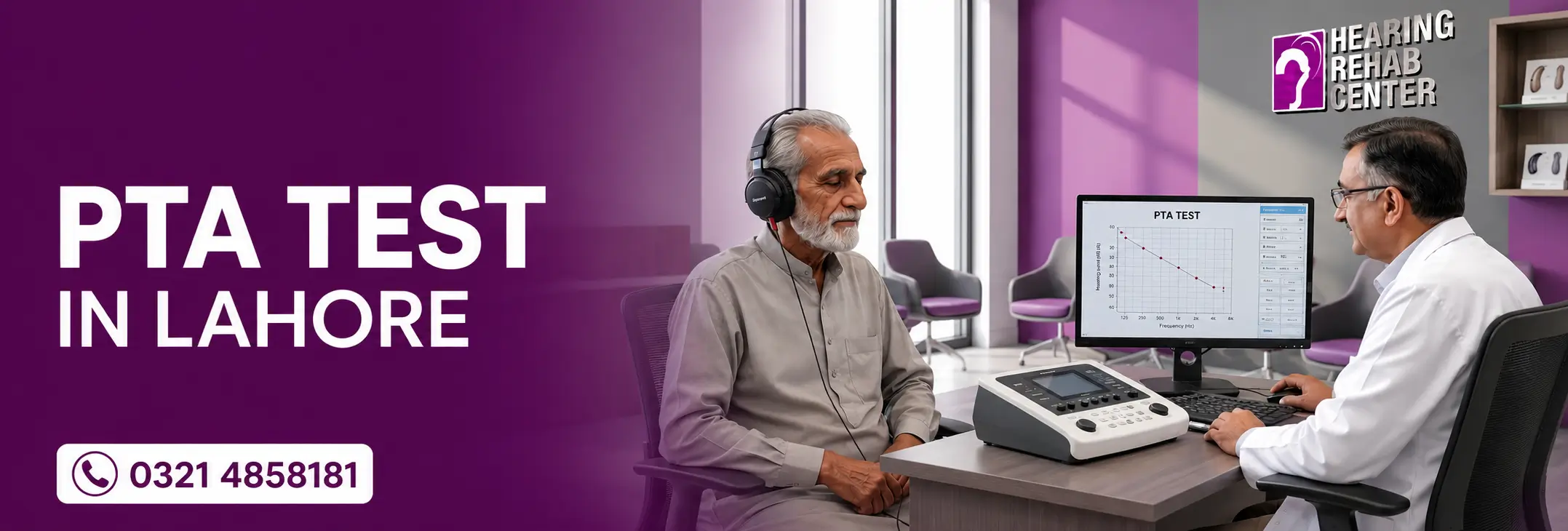
Pure tone audiometry is a behavioral hearing test – that is, it depends on your active response rather than just machine reading. It is sometimes shortened to PT audiometry or in clinical notes it is called pure audiometry. During the test, an audiologist uses a device called an audio meter to send tones of different pitches (frequencies) to your ear, one at a time, through headphones or small inserted earphones. Each tone starts at an audible level and gradually decreases as long as you can barely hear it. The lowest level you can detect is recorded as your hearing range for this pitch – that is why the test is also formally called pure tone thrashed audiometry.
The test usually checks frequencies between 250 Hz and 8000 Hz-the limit that covers most everyday speech sounds. The results are plotted on a chart called an audiogram, which shows your hearing sensitivity in a separate trial frequency for each ear. Audiologists often check bone conduction using a small shaking device placed behind the ear, which helps determine whether a hearing problem arises in the outer/middle ear or in the inner ear and hearing nerves.
Audiogram doesn’t just tell you that you have hearing loss. It tells your Audiologist more.
This information directly shapes the treatment – whether it means earwax removal, medical treatment for ear infections, or hearing aids that match your specific hearing pattern.
The pure-tone audiometry test doesn’t just measure how well you listen – it also gives an indication of why your hearing is changing. Some of the most common underlying causes revealed through PTA results include:
The low or high frequency develops over the years of the period and is generally not noticeable at the level associated with daily exposure. Age-associated hearing loss.
A single exposure to high machinery, traffic, high headphones or loud sounds (such as vibration) can damage the inner ear, which appears on the audiogram as a decrease in December’s 4000 Hz. Noise-induced hearing loss
Usually in children, these usually cause temporary hearing loss that improves after treatment for primary infections or fluids.
One of the most easily reversed causes – the removal of a simple wax can often normalize hearing.
Certain antibiotics, chemotherapy drugs, and overdoses can affect hearing as pain-relieving side effects, which PTA can help monitor over time.
Some hearing losses occur at birth or arise due to inherited conditions, which is why hearing screening in children and childhood are very important.
You are not differentiated unless there is severe hearing loss. If you see any of the following, consider booking a PTA test for ear health or a general audiometry exam:
PTA Test: What happens before, after and during your hearing test The standard PTA at the clinic follows a fairly consistent process:
Step 1
The audiologist first looks at your ear canal with an otoscope to rule out wax blockage or infection, as these can worsen the results.
Step 2
The test is done in a quiet booth or sound-treated room to eliminate noise interference in the background.
Step 3
You wear headphones or put on earphones, and tones of different pitches and volumes are played separately in each ear. Whenever you hear a sound, you gesture (usually by pressing a button or raising your hand), even lightly.
Step 4
If needed, a small oscillator is placed on the bone behind your ear to check how it is processed after the outer and middle ears of the voice are bypassed.
Step 5
If there is a large difference between your two ears, the audiologist can play a soft masking noise in a non-test ear so that the results are not shaken by crossing the sounds.
Step 6
Your answers are immediately marked on the audiogram so your audiologist can discuss the results with you on the same day.
An audiogram plots frequency (pitch) on the horizontal axis and hearing level on the vertical axis (sound necessary for you to detect). Low numbers near the top mean better hearing on this pitch; the lower the chart your threshold falls, the greater the hearing loss at this frequency.
Hearing loss is generally classified as:
| Category | Hearing Range |
|---|---|
| Normal | Up to 25 dB |
| Mild | 26–40 dB |
| Moderate | 41–55 dB |
| Moderately Severe | 56–70 dB |
| Severe | 71–90 dB |
| Profound | Above 90 dB |
PTA (pure tone audiometry): tests each ear individually using headphones. Precisely, it provides a specific range for the ear. Considered a basic diagnostic test.
Soundfield audiometry: it uses loudspeakers instead of headphones. Test the two ears together instead of separating them. Commonly used for young children or to assess how well hearing aids are working.
Tympanometry impedance audiometry: Not testing the test directly to find out how the feathers move in response to the respiratory tract and asking for help in detecting the problem in between while it is being built. That is why many clinics offer the usual pure-tone voice metric tympanometry package for a complete picture
Speech audiometry: tests your ability to understand actual words at different volumes, which satisfies pure tone results.
Once your PTA test is done, your audiogram specialist will guide you through your audiogram and explain what it means in easy-to-understand language. Depending on the result, the next step usually falls into one of these categories:
General hearing: no further action required – usually a routine retest is recommended every 1-2 years, or before if new symptoms appear.
Mild hearing loss: Your audiologist may recommend early use of monitoring, communication strategies, or, in some cases, hearing aids, especially if the damage is affecting your work or social life.
Conductive hearing loss: often treatable – this can mean removing ear wax, treating an ear infection, or consulting an ENT specialist if a structural problem (such as perforated eardrums) is suspected.
Sensory hearing loss: this type is usually permanent, so with guidance to protect your remaining hearing from further noise damage, the focus becomes on the fitting of the hearing aid, perfectly matching your audiogram.
Unexplained or disproportionate results: if one ear shows particularly different results from the other or the pattern is abnormal, your audiologist may refer you for further tests or imaging to rule out other causes.
The pure tone audiometry PTA test for ear cost and price in Pakistan usually ranges from PKR 500 to 2,000. It varies by lab, clinic, city, and more. One-time diagnostic cost – with sufficient access for routine screening.


Hearing Rehab Center provides complete Pure Tone Audiometry (PTA) testing in Lahore using advanced diagnostic equipment and certified audiology expertise. Get a clear picture of your hearing thresholds across all frequencies. Walk-ins are welcome, but calling ahead means a shorter waiting time. Bring any previous hearing reports if you have them.
The whole pure-tone audiometry test process is painless, non-invasive, and a typical audiometric exam takes 20-30 minutes.
The PTA speaks of the extent of your origin in various questions. Tympanometry, on the other hand, is called due to the movement of the curtains and to check the reaction of the ears - it does not try to respond directly but helps due to problems between you.
I can cause unidentified hearing loss to children and affect attention and learning in language development. The response test helps to see problems early, when most effective.
Exposure to loud noises up to 24 hours in advance avoid, and try to keep your ears more wax purified. Usually no other special preparation is required.
The results are plotted immediately on the audiogram during the test, and most clinics discuss the results with you immediately after the session.
Chat with a Hearing Expert